
AI Invents a Statute or a Supreme Court Ruling, and Someone Uses It. Who Is Liable?
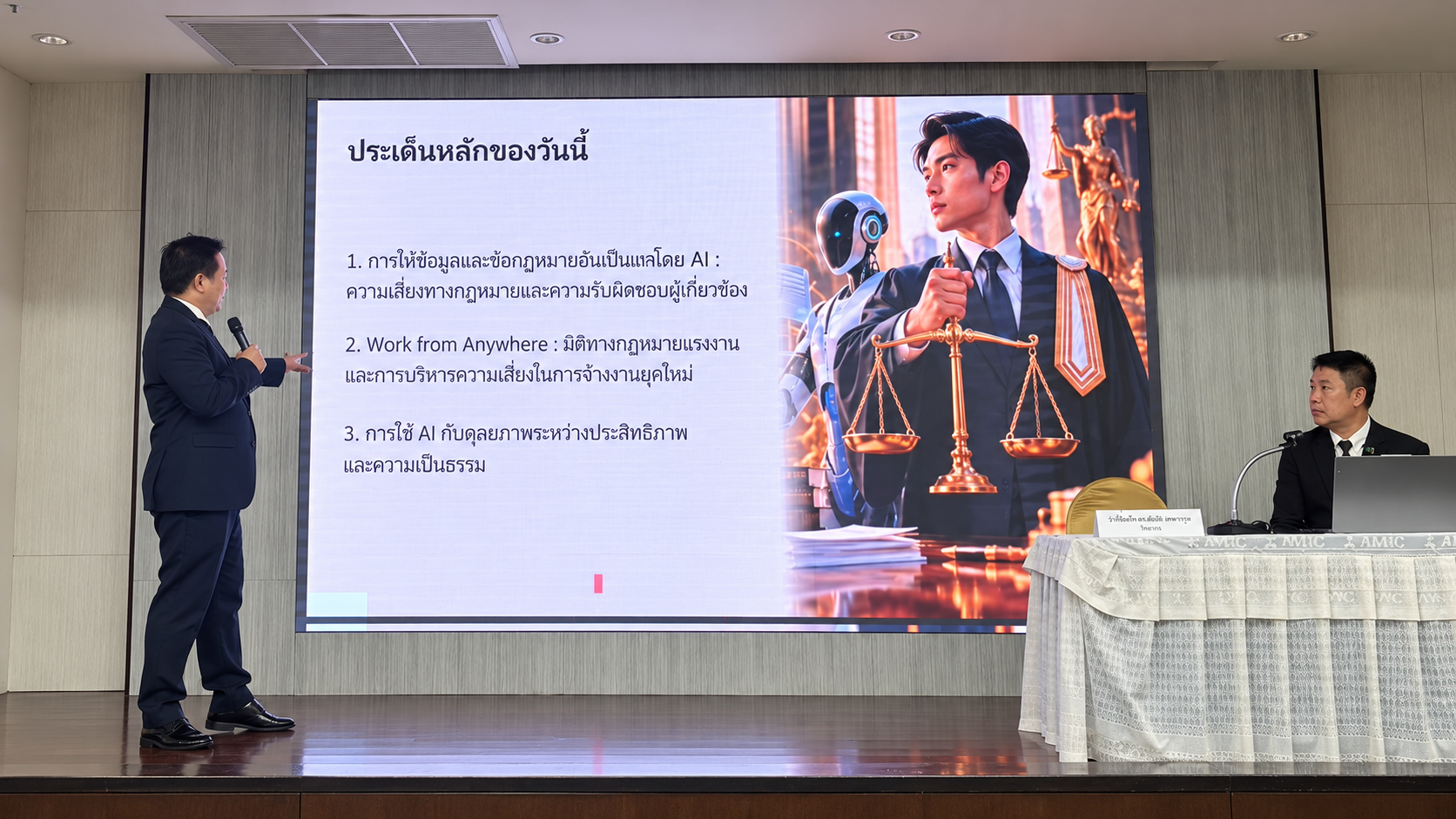
The company that built the AI? The lawyer who used it? Or the client who hired the lawyer?
In Thailand, liability for incorrect AI output depends on the duties, conduct and circumstances of each party involved. Anyone instructing AI or using its output should therefore verify its accuracy before relying on it.
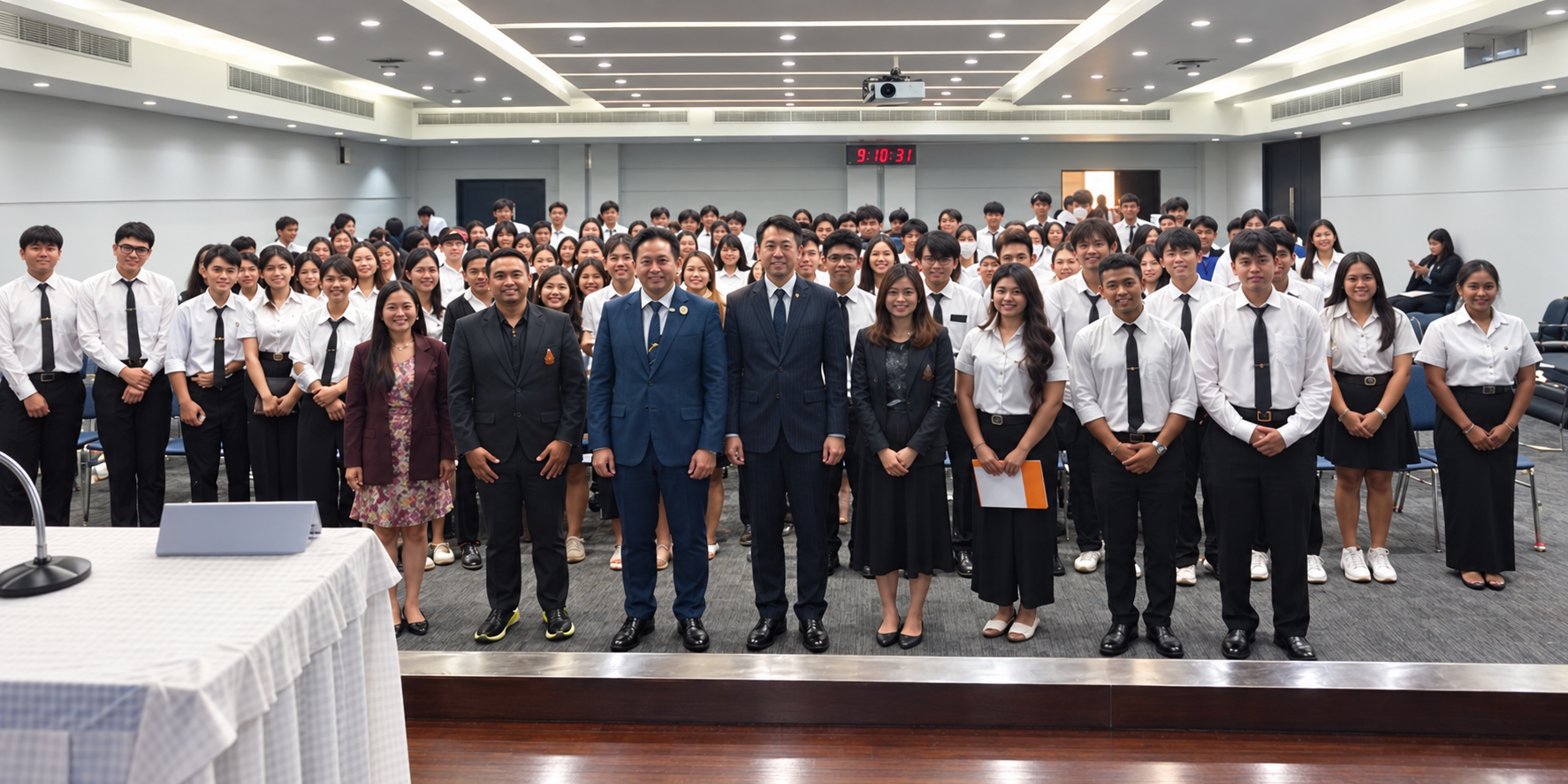
This article is adapted from a lecture on Risk Management and Liability for Erroneous AI Decisions delivered at the Faculty of Law, Suan Sunandha Rajabhat University, on 7 October 2026.
AI can produce incorrect answers that look convincing
When someone gives AI an instruction, the AI generally predicts what a likely answer should look like. Asked to find a Supreme Court judgment, it draws on what it already knows about what a judgment looks like, with a case number, a year and a legal principle. It may therefore produce something that looks like a judgment even though no such case exists. This is called hallucination.
AI can get things wrong in any field. Thai legal work presents two important concerns. First, the statutes and judgments accessible to a particular AI system may be incomplete, leading it to generate answers from insufficient information. Second, Thai laws are amended. The Labour Protection Act B.E. 2541 (1998), for example, has been amended by the Labour Protection Act (No. 9) B.E. 2568 (2025), so an AI trained on older data may answer according to provisions that have since been amended.
The most common errors fall into five patterns.
- Citing Supreme Court judgments that do not exist
- Citing the wrong section number
- Quoting statutory text that is out of date
- Misstating the legal principle
- Citing a real judgment whose facts do not match the point it is cited for
The last pattern is the most dangerous. Because the case number can be found, the user believes the citation has been checked, without having read the whole judgment.
Cases that have already happened abroad
In Mata v. Avianca (United States, 2023), lawyers used ChatGPT to find authorities for a court filing, but the cases did not exist. The US federal court sanctioned the lawyers and their firm. The case is now cited worldwide as a warning to the legal profession.
In Moffatt v. Air Canada (Canada, 2024), the airline's chatbot gave a passenger information about a fare discount that did not match the airline's actual policy. The airline argued that the chatbot was responsible for its own actions. The Civil Resolution Tribunal of British Columbia rejected that argument and held the airline liable to the passenger. The lesson is that companies must take responsibility for the accuracy of information supplied by their chatbots.
Have Thai courts regulated this yet?
In 2025 the President of the Supreme Court issued a Recommendation on the Use of Artificial Intelligence Technology in Case Work, and the Civil Court issued its Rules on the Use of Artificial Intelligence Technology in Preparing Pleadings or Other Documents Filed with the Court B.E. 2568 (2025), effective 17 November 2025. They contain three key points. These specific filing rules apply to the Civil Court. The requirements of other courts should be checked separately.
- Facts, statutory provisions and judgments produced by AI must be verified before filing.
- The parts prepared by AI must be disclosed, with a certification that their accuracy has been checked.
- The filing party bears full responsibility, as if they had written the document themselves, and cannot blame the AI.
Liability of the four parties involved
| Party | Basis of liability | Open questions |
|---|---|---|
| Users, such as lawyers and in-house counsel | Tort under Section 420 of the Civil and Commercial Code · breach of contract with the client · professional ethics · sanctions under court rules | The professional standard is to verify, so failing to verify may amount to negligence |
| Organisations and law firms | Employer's joint liability under Section 425 · principal and agent under Section 427 · duty to maintain data security under Section 37 of the Personal Data Protection Act (PDPA) | The absence of an AI use policy increases the risk of errors and unauthorised disclosure |
| AI service providers | Terms of Service · consumer protection law | How far can exclusion clauses in terms that users click to accept be enforced? |
| Developers | General tort · liability for damage arising from unsafe goods | Is software a product, and how can a victim prove a defect in a system no one can see? |
The AI company can be sued in theory, but it is hard in practice. Providers may state in their terms of service that answers may be inaccurate and that users must verify them. How far those exclusion clauses can be enforced must be assessed under the Unfair Contract Terms Act B.E. 2540 (1997). A claim under the Liability for Damage Arising from Unsafe Goods Act B.E. 2551 (2008) still raises the question of whether AI falls within the statutory definition of a product. If the Act applies, the burden of proof under Section 6 must be considered; it differs from proving negligence under general tort law.
The lawyer is among the first people whose responsibility must be examined, because the lawyer signs the document and has a professional duty to verify it. This may involve civil liability, professional ethics and sanctions under court rules. Each form of liability must be assessed under the requirements of the applicable law.
The client cannot escape the outcome of the case. Section 62 of the Civil Procedure Code gives a lawyer appointed by a party the power to conduct the case and take any proceedings on behalf of the party. If the case is lost because the lawyer relied on false law, the loss falls on the client. The client may claim damages from the lawyer if the legal requirements for liability are met. If the engagement is treated as agency, Section 812 of the Civil and Commercial Code makes an agent liable for damage caused by their negligence. If it is treated as another type of contract, the client may claim compensation under Section 215 where the lawyer did not perform the obligation in accordance with its true intent. Where clients use AI themselves and decide without consulting a professional, they will largely bear the loss themselves.
Legal issues
First, does a lawyer who cites a fake judgment in a court filing commit an offence under Section 180 of the Criminal Code? That section penalises producing or presenting false evidence in a judicial proceeding. A Supreme Court judgment, however, is a statement of law, not evidence. In the author's view, the offence may therefore not be made out. That does not mean the lawyer escapes liability, because professional ethics and the court's own rules still apply.
Second, Section 437, paragraph two, of the Civil and Commercial Code imposes liability on a person in possession of a thing which is dangerous by nature, by its intended use or by its mechanical action, unless they prove force majeure or the victim's own fault. If an AI system is treated as such a thing, the burden of proof shifts to its possessor, which would greatly help victims. This question has not yet been settled.
Safeguards
- Check statutory text against the consolidated version published by the Office of the Council of State, and confirm it reflects the latest amendment. Do not rely on AI answers or other websites.
- Read judgments in full from the Supreme Court's own database.
- Do not enter client information into public AI tools.
- Disclose AI use as the court rules require, and keep a record of what was verified.
Treat AI like a highly experienced clerk: fast and a strong drafter, but every page must be checked by the lawyer.
Conclusion
AI drafts quickly, but the law still looks for someone to hold liable, and the first person it looks at is whoever used the AI's output. Three principles are worth remembering.
- Verify every time. Take statutory text from the Council of State's consolidated version and read judgments in full.
- Disclose AI use as the court rules require, and keep a record of what was verified.
- Organisations should have an AI use policy that assigns verification duties and manages risks.
AI law in Thailand and abroad is changing quickly, and readers should check the current position before relying on it. This article is general information and is not legal advice on any particular matter.
About the Author
Dr. Sarun Amatyakul is a lawyer and university lecturer with interests in business law, competition law and the use of AI in legal practice.
References
- Consolidated Thai legislation published by the Office of the Council of State: the Civil and Commercial Code, Civil Procedure Code, Criminal Code and Personal Data Protection Act B.E. 2562 (2019)
- Report of the Court of Justice spokesperson’s explanation of the Supreme Court President’s AI guidance, Thai Post
- Thailand Civil Court Issues Rules on AI-Generated Court Filings, Tilleke & Gibbins
- Mata v. Avianca, Opinion and Order on Sanctions, 22 June 2023
- Moffatt v. Air Canada, 2024 BCCRT 149